The Cathedral with No First Stone
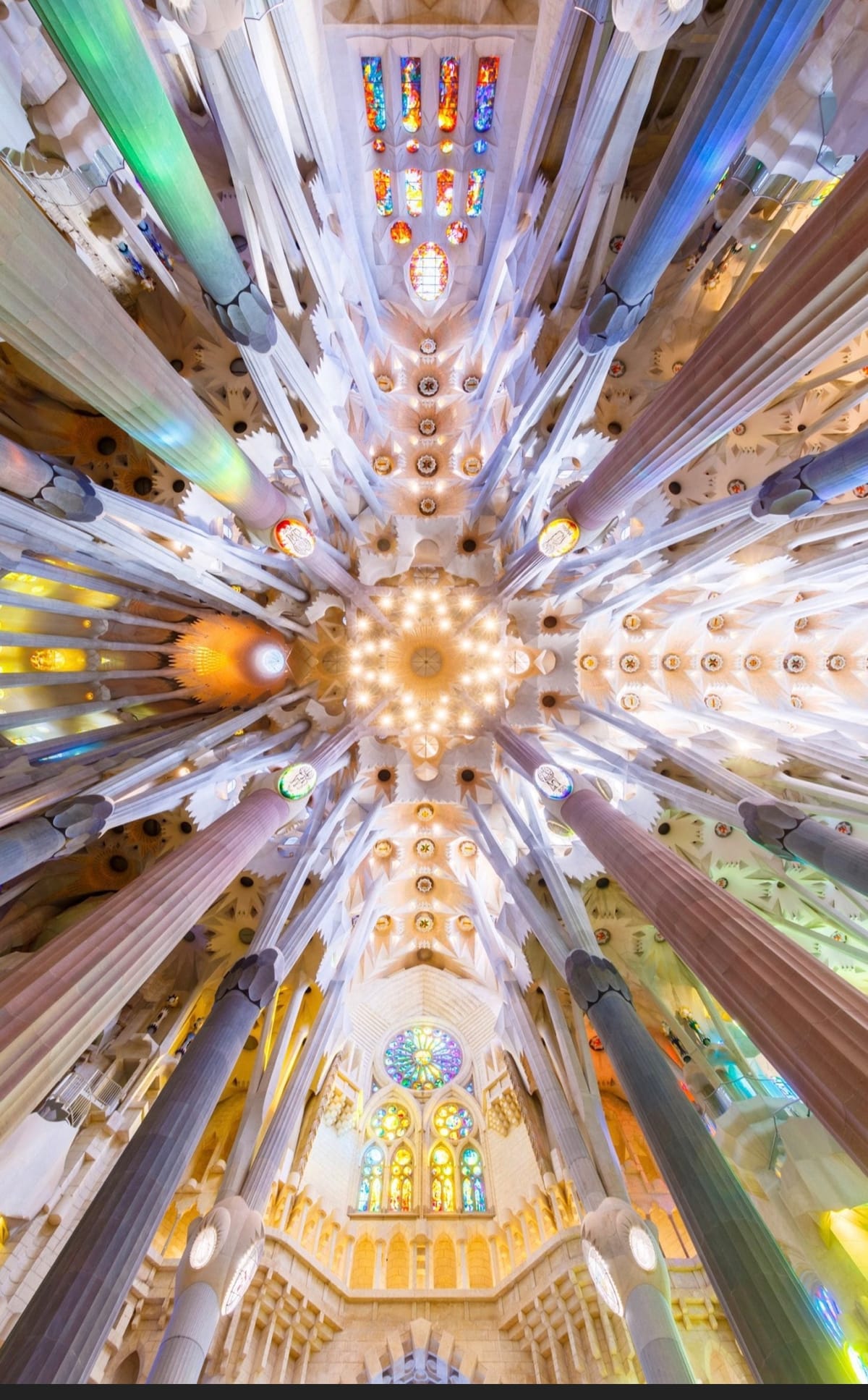
A Thought Experiment on Complexity, Coordinates, and the Economics of Illusion
Imagine you are asked a simple question:
Where does a cathedral begin?
Not when it was built.
Not why it was built.
But: Where is its true starting point?
At first, the answer seems easy. You ask the question to a stranger.
The Stranger says, “The cathedral begins with the architect.”
The architect imagines the structure, sketches the outline, and establishes the blueprint.
It is a reasonable answer — clean, intuitive, and satisfying.
The Architect interprets the concepts given, incorporates them with their own, then translates this from the modal to the physical.
But consider the comment of a passerby.
They insist the cathedral begins not in the mind, but on the ground:
with the placement of the first stone,
the marking of the footprint,
the selection of the physical coordinate from which every wall, arch, and tower must rise.
A pious bystander disagrees with both.
For them the cathedral begins in theology — in the conception of a sacred space intended to represent God,
in the accumulated centuries of religious imagination
that made the very idea of cathedral possible.
An Historian amongst the crowd overhears and chimes in:
No, the cathedral begins much earlier,
in humanity’s ancient impulse to build monumental structures long before Christianity existed.
The impulse predates the religion that now justifies it.
A passionate Geologist argues differently still:
The true beginning lies in geological activity — in the stone itself.
Before imagination, before religion, before architecture, there is the material substrate.
Stand there long enough and you will hear many more beginnings. Each one feels like a rational coordinate, because from their perspective, each claim is rational- to them. And this is the problem.
There is no single beginning.
There is no privileged first coordinate.
There is only a nested system whose origins recede layer after layer,
far beyond what any one mind can grasp.
This is the Paradox of the First Coordinate.
This paradox creates such a problem for the philosopher. Where does one start? The problem lies within the way that we understand information. We can see and understand complexity in theory, but we have to think about it sequentially and not as it exists.
Human beings can only understand one concept at a time, processing information sequentially even when the underlying reality is recursive and interconnected. Because of this limitation, any system—no matter how correct—must be presented in a linear order that inevitably distorts its structure. When the sequence encounters a conceptual loop, a missing foundation, or an apparent paradox, the audience experiences a logical break and may reject the system outright, not because the claims are wrong but because sequential reasoning forces contradictions that do not exist in the system itself. Logic exacerbates this by demanding a first premise or foundational beginning, even though recursive systems have none; thus a true sequence can appear to conflict with its own starting points. The result is that paradoxes arise not from the truth of the claims but from the linear, step-by-step way humans must comprehend them.
This leads us to compressions of ideas. This leads to the paradox of reality and illusion: There are real, measurable truths and objects in the world, but due to the shear complexity of coordinate points within the sphere of the universe (literally and metaphorically) that we construct illusions, grand heuristics, to make sense of and understand the world.
The Cathedral needs all of those elements at the same time of its construction. Without theology, there's no purpose. Without the Architect, there is no design. Without the stone, there is no media from which to build. Without the Human Impulse, there is no drive to build such things.
So I am left with an opportunity to furnish a definition of the First Coordinate, and here it is:
The First Coordinate is the cognitive entry point into a complex system — the place where understanding begins. It is not a true origin, but the initial position from which sequential reasoning unfolds. Because complex systems have many valid entry points, there is no single privileged First Coordinate, only different starting points chosen by different minds.